Buy selfinvest.eu ?
We are moving the project
selfinvest.eu .
Are you interested in purchasing the domain
selfinvest.eu ?
domain@kv-gmbh.de · 0541-91531010
Buy selfinvest.eu ?
Is the square axis-symmetric, but not point-symmetric?
Yes, a square is axis-symmetric, meaning it has rotational symmetry around its center axis. However, it is not point-symmetric, as it does not have reflectional symmetry across any point within the shape. This is because a square does not have a point that can be reflected across to create a matching image. **
Can a rational function be both axis-symmetric and point-symmetric?
No, a rational function cannot be both axis-symmetric and point-symmetric. If a rational function is axis-symmetric, it means that it is symmetric with respect to the y-axis, while point-symmetry would require symmetry with respect to the origin. These two types of symmetry are mutually exclusive, so a rational function cannot exhibit both types of symmetry simultaneously. **

Similar search terms for Symmetric
Top-Angebote
Products related to Symmetric:
-
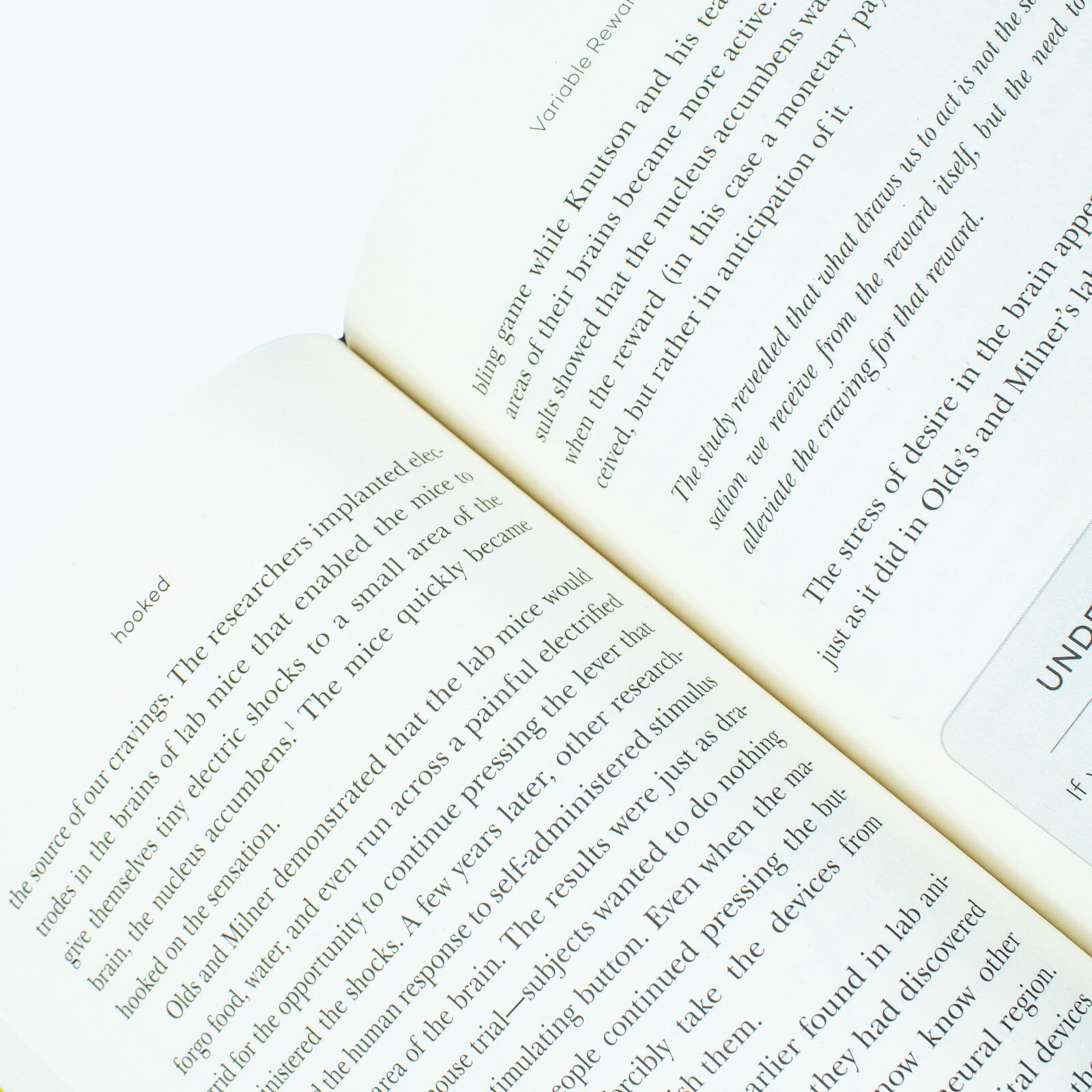
Portfolio Penguin Hooked: How to Build Habit-Forming Products by Nir EyalNir Eyal reveals how successful companies create products people can't put down - and how you can tooWhy do some products capture our attention while others flop? What makes us engage with certain things out of sheer habit? Is there an underlying pattern to how technologies hook us?Nir Eyal answers these questions (and many more) with the Hook Model - a four-step process that, when embedded into products, subtly encourages customer behaviour. Through consecutive "hook cycles," these products bring people back again and again without depending on costly advertising or aggressive messaging.Hooked is based on Eyal's years of research, consulting, and practical experience. He wrote the book he wished had been available to him as a start-up founder - not abstract theory, but a how-to guide for building better products. Hooked is written for product managers, designers, marketers, start-up founders, and anyone who seeks to understand how products influence our behaviour.Eyal provides readers with practical insights to create user habits that stick; actionable steps for building products people love; and riveting examples from the iPhone to Twitter, Pinterest and the Bible App.7,98 £*Shipping: 2,99 £Secure redirect to the provider
-
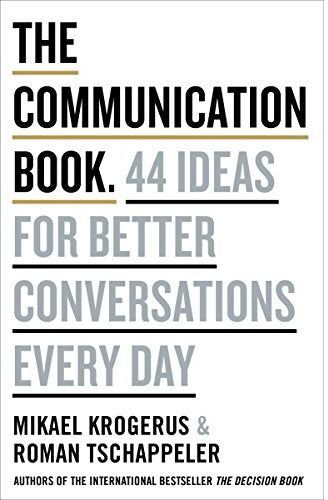
Portfolio Penguin The Communication Book: 44 Ideas for Better Conversations Every DayLEARN THE TECHNIQUES YOU NEED TO COMMUNICATE BETTER AT WORK AND HOME 'Communication is a bit like love - it's what makes the world go round, but nobody really knows how it works.' Struggle to find the words in meetings? Know what you mean but not how to say it? From Aristotle's thoughts on presenting to the Harvard Negotiation Project, internationally bestselling duo Mikael Krogerus and Roman Tschäppeler have 44 tried and tested ideas to change that. Distilled into a single volume, their winning marriage of practicality and humour turns seemingly difficult ideas into clear and entertaining diagrams that will help you: -Brush up on your listening skills and small talk -Run better meetings -Improve the conversations in your head Whether you're a CEO, just starting out or want to improve your relationships at home, this guide will improve your communication skills and help you form more meaningful connections.6,99 £*Shipping: 2,99 £Secure redirect to the provider

-
Which capital and lowercase letters are rotationally symmetric and reflection symmetric?
The capital letters that are both rotationally symmetric and reflection symmetric are "I", "O", "S", "H", "X", and "Z". The lowercase letters that are both rotationally symmetric and reflection symmetric are "o" and "x". These letters look the same when rotated 180 degrees or when reflected across a vertical line. **
-
Can a polynomial function be both axis-symmetric and point-symmetric?
No, a polynomial function cannot be both axis-symmetric and point-symmetric. If a polynomial function is axis-symmetric, it means that it is symmetric with respect to the y-axis, while if it is point-symmetric, it means that it is symmetric with respect to the origin. These two types of symmetry are mutually exclusive, so a polynomial function cannot exhibit both types of symmetry simultaneously. **
-
Which uppercase and lowercase letters are rotationally symmetric and reflection symmetric?
The uppercase letters that are both rotationally symmetric and reflection symmetric are 'H', 'I', 'N', 'O', 'S', 'X', and 'Z'. The lowercase letters that are both rotationally symmetric and reflection symmetric are 'o' and 'x'. These letters look the same when rotated 180 degrees or when reflected across a vertical axis. **
-
Which capital letters of the alphabet are point symmetric and axis symmetric?
The capital letters of the alphabet that are point symmetric are A, H, I, M, O, T, U, V, W, X, and Y. These letters look the same when rotated 180 degrees around their center point. The capital letters that are axis symmetric are A, H, I, M, O, T, U, V, W, X, and Y. These letters look the same when reflected across a vertical axis. **

Which capital letters of the alphabet are point-symmetric and axis-symmetric?
The capital letters of the alphabet that are both point-symmetric and axis-symmetric are the letter "H" and the letter "I". These letters have vertical symmetry as well as symmetry when rotated 180 degrees. This means that they look the same when flipped vertically or rotated 180 degrees around their center point. **
Does "symmetric to the origin" always mean point symmetric in profile tasks?
No, "symmetric to the origin" does not always mean point symmetric in profile tasks. In profile tasks, "symmetric to the origin" means that the object is symmetric with respect to the origin of the coordinate system, which is the point (0,0). This means that if you reflect the object across the x-axis and the y-axis, it will look the same. Point symmetry, on the other hand, means that the object is symmetric with respect to a specific point, not necessarily the origin. Therefore, while point symmetry implies symmetry to the origin, symmetry to the origin does not always imply point symmetry in profile tasks. **
Top-Angebote
Products related to Symmetric:
-
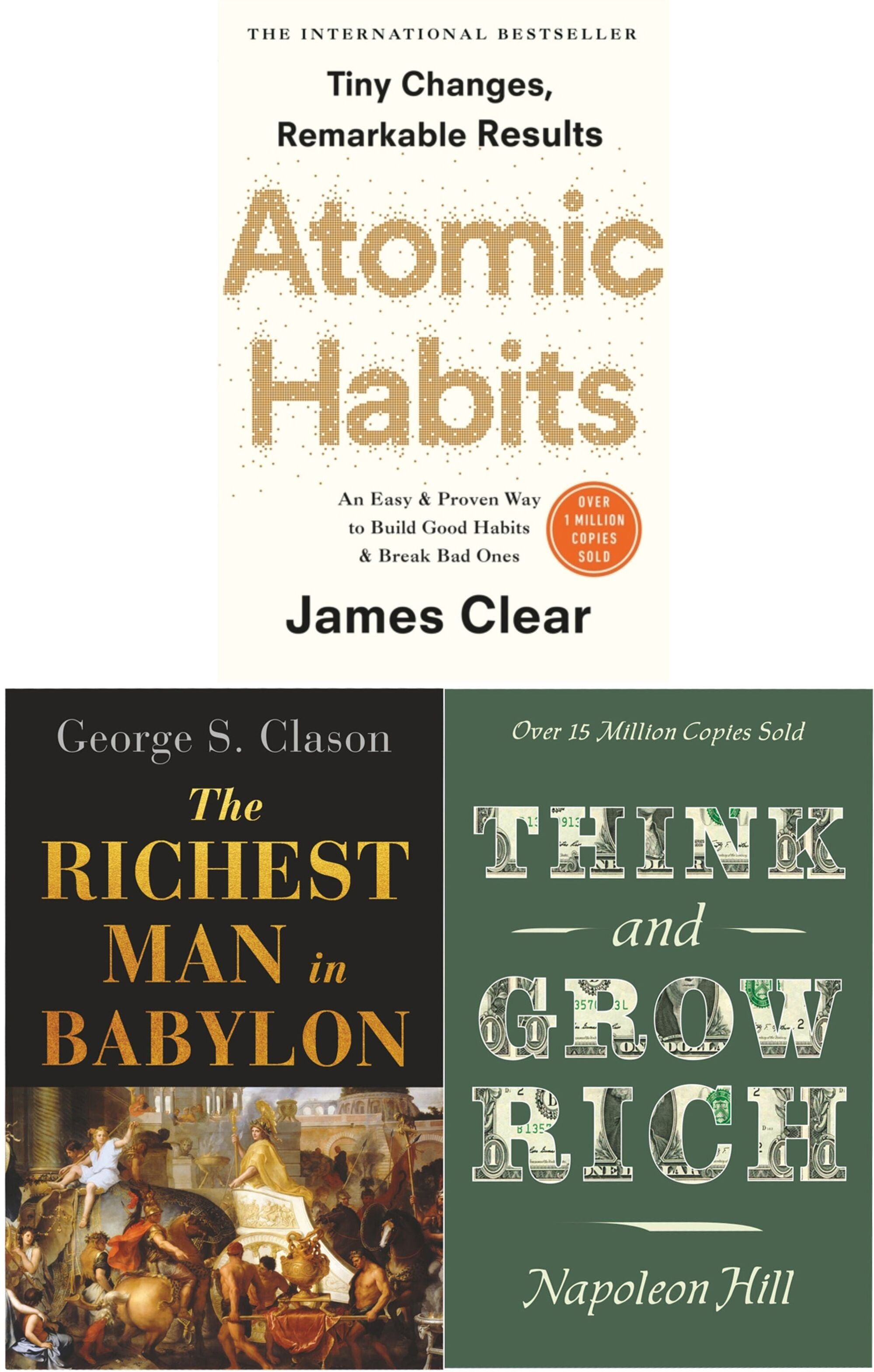
Cornerstone/Wilco Atomic Habits, The Richest Man in Babylon & Think and Grow Rich – 3 Book Collection Set Personal Finance, Wealth & Self-Development ClassicsTransform your habits, mindset, and financial future with this powerful 3-book collection set, featuring three of the most influential books on success, wealth, and personal growth. This essential bundle includes: Atomic Habits by James Clear – Discover how small, consistent habits can lead to extraordinary results and lasting success. The Richest Man in Babylon by George S. Clason – Learn timeless principles of saving, investing, and building wealth through simple financial wisdom. Think and Grow Rich by Napoleon Hill – Unlock the mindset and strategies behind achievement, success, and financial independence. Together, these books provide a complete guide to building better habits, mastering your finances, and developing a success-driven mindset. Ideal for entrepreneurs, professionals, students, and anyone looking to improve their life. Why Readers Love This Collection: Includes 3 bestselling self-help and finance classics Covers habits, wealth-building, and success mindset Practical, timeless advice for real-life results Suitable for beginners and experienced readers Perfect gift for motivation and personal growth A must-have bundle for anyone serious about success, this collection offers proven strategies for achieving long-term growth and financial freedom.14,99 £*Shipping: 2,99 £Secure redirect to the provider
-
Is the square axis-symmetric, but not point-symmetric?
Yes, a square is axis-symmetric, meaning it has rotational symmetry around its center axis. However, it is not point-symmetric, as it does not have reflectional symmetry across any point within the shape. This is because a square does not have a point that can be reflected across to create a matching image. **
-
Can a rational function be both axis-symmetric and point-symmetric?
No, a rational function cannot be both axis-symmetric and point-symmetric. If a rational function is axis-symmetric, it means that it is symmetric with respect to the y-axis, while point-symmetry would require symmetry with respect to the origin. These two types of symmetry are mutually exclusive, so a rational function cannot exhibit both types of symmetry simultaneously. **
-
Which capital and lowercase letters are rotationally symmetric and reflection symmetric?
The capital letters that are both rotationally symmetric and reflection symmetric are "I", "O", "S", "H", "X", and "Z". The lowercase letters that are both rotationally symmetric and reflection symmetric are "o" and "x". These letters look the same when rotated 180 degrees or when reflected across a vertical line. **
-
Can a polynomial function be both axis-symmetric and point-symmetric?
No, a polynomial function cannot be both axis-symmetric and point-symmetric. If a polynomial function is axis-symmetric, it means that it is symmetric with respect to the y-axis, while if it is point-symmetric, it means that it is symmetric with respect to the origin. These two types of symmetry are mutually exclusive, so a polynomial function cannot exhibit both types of symmetry simultaneously. **
Similar search terms for Symmetric
-
Portfolio Penguin Hooked: How to Build Habit-Forming Products by Nir EyalNir Eyal reveals how successful companies create products people can't put down - and how you can tooWhy do some products capture our attention while others flop? What makes us engage with certain things out of sheer habit? Is there an underlying pattern to how technologies hook us?Nir Eyal answers these questions (and many more) with the Hook Model - a four-step process that, when embedded into products, subtly encourages customer behaviour. Through consecutive "hook cycles," these products bring people back again and again without depending on costly advertising or aggressive messaging.Hooked is based on Eyal's years of research, consulting, and practical experience. He wrote the book he wished had been available to him as a start-up founder - not abstract theory, but a how-to guide for building better products. Hooked is written for product managers, designers, marketers, start-up founders, and anyone who seeks to understand how products influence our behaviour.Eyal provides readers with practical insights to create user habits that stick; actionable steps for building products people love; and riveting examples from the iPhone to Twitter, Pinterest and the Bible App.7,98 £*Shipping: 2,99 £Secure redirect to the provider
-
Portfolio Penguin The Communication Book: 44 Ideas for Better Conversations Every DayLEARN THE TECHNIQUES YOU NEED TO COMMUNICATE BETTER AT WORK AND HOME 'Communication is a bit like love - it's what makes the world go round, but nobody really knows how it works.' Struggle to find the words in meetings? Know what you mean but not how to say it? From Aristotle's thoughts on presenting to the Harvard Negotiation Project, internationally bestselling duo Mikael Krogerus and Roman Tschäppeler have 44 tried and tested ideas to change that. Distilled into a single volume, their winning marriage of practicality and humour turns seemingly difficult ideas into clear and entertaining diagrams that will help you: -Brush up on your listening skills and small talk -Run better meetings -Improve the conversations in your head Whether you're a CEO, just starting out or want to improve your relationships at home, this guide will improve your communication skills and help you form more meaningful connections.6,99 £*Shipping: 2,99 £Secure redirect to the provider
-
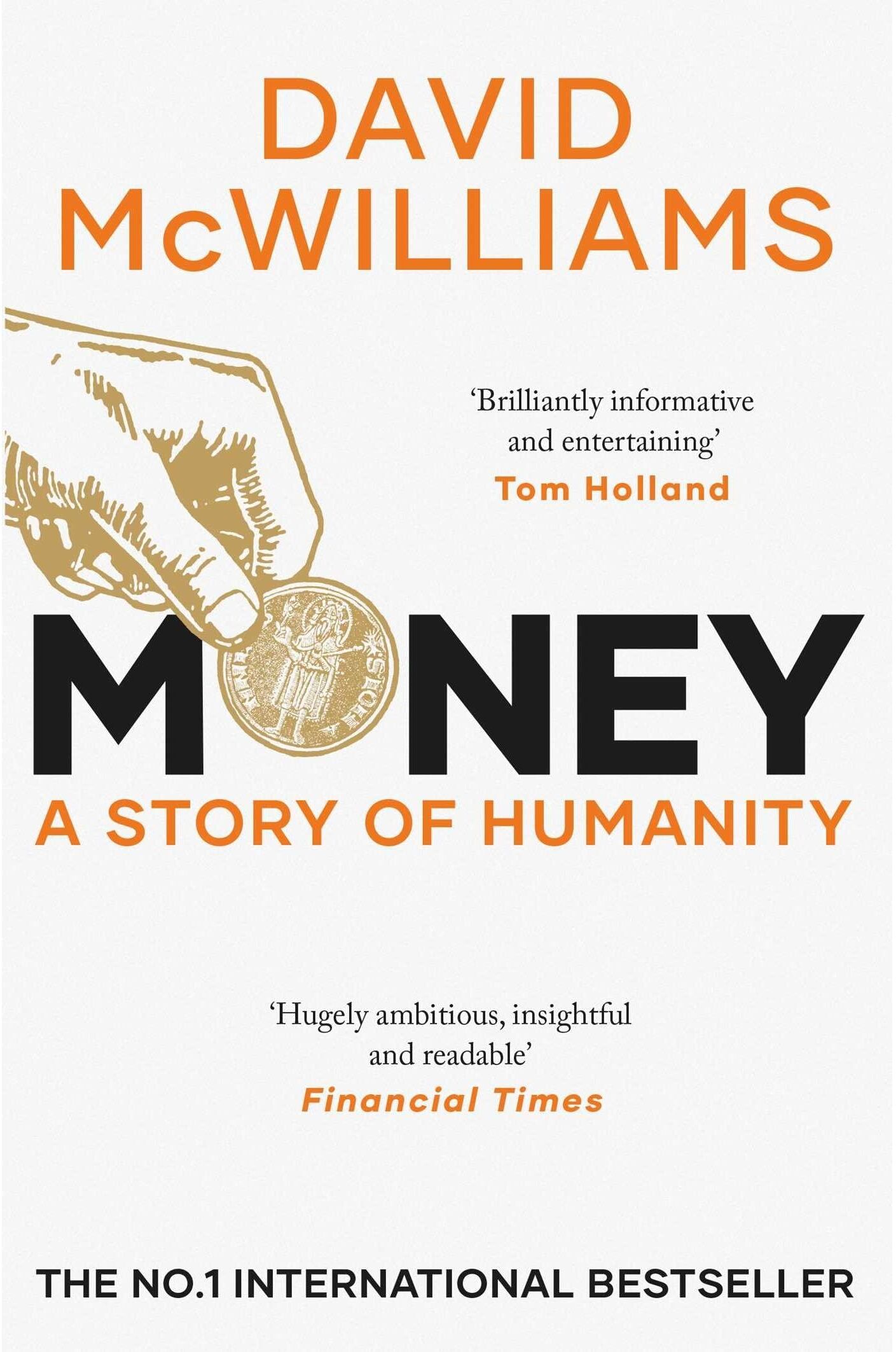
Simon & Schuster Money: A Story of Humanity by David McWilliams Economic History & Global Finance ExplainedIn Money: A Story of Humanity, renowned economist David McWilliams explores the fascinating history of money — not just as currency, but as a powerful force that has shaped human civilisation, relationships, technology, and global society. From ancient barter systems to cryptocurrency revolutions, McWilliams reveals how money reflects our values, ambitions, fears, politics, and culture.Rich with storytelling, sharp insights, and humour, this book makes complex economic ideas accessible, engaging, and deeply human. Perfect for readers who enjoy exploring how history, psychology, markets, and power intersect, Money: A Story of Humanity provides a fresh, eye-opening look at how money drives — and is driven by — human behaviour. Ideal for fans of Yuval Noah Harari, Tim Harford, Niall Ferguson, and Mary Beard.7,99 £*Shipping: 2,99 £Secure redirect to the provider
-
Inspire Essentials Lucky Cat Keychain Feng Shui Wealth Talisman Desk And Bag Charm Lucky Cat Keychain Feng Shui Wealth Talisman Desk And Bag CharmInvite luck prosperity and positive energy into your daily life with this meaningful lucky cat keychain. Inspired by traditional symbols of wealth and protection this compact charm is designed to go wherever you do. Whether used as a keychain or...34,98 $*Shipping: 0,00 $Secure redirect to the provider
-
Which uppercase and lowercase letters are rotationally symmetric and reflection symmetric?
The uppercase letters that are both rotationally symmetric and reflection symmetric are 'H', 'I', 'N', 'O', 'S', 'X', and 'Z'. The lowercase letters that are both rotationally symmetric and reflection symmetric are 'o' and 'x'. These letters look the same when rotated 180 degrees or when reflected across a vertical axis. **
-
Which capital letters of the alphabet are point symmetric and axis symmetric?
The capital letters of the alphabet that are point symmetric are A, H, I, M, O, T, U, V, W, X, and Y. These letters look the same when rotated 180 degrees around their center point. The capital letters that are axis symmetric are A, H, I, M, O, T, U, V, W, X, and Y. These letters look the same when reflected across a vertical axis. **
-
Which capital letters of the alphabet are point-symmetric and axis-symmetric?
The capital letters of the alphabet that are both point-symmetric and axis-symmetric are the letter "H" and the letter "I". These letters have vertical symmetry as well as symmetry when rotated 180 degrees. This means that they look the same when flipped vertically or rotated 180 degrees around their center point. **
-
Does "symmetric to the origin" always mean point symmetric in profile tasks?
No, "symmetric to the origin" does not always mean point symmetric in profile tasks. In profile tasks, "symmetric to the origin" means that the object is symmetric with respect to the origin of the coordinate system, which is the point (0,0). This means that if you reflect the object across the x-axis and the y-axis, it will look the same. Point symmetry, on the other hand, means that the object is symmetric with respect to a specific point, not necessarily the origin. Therefore, while point symmetry implies symmetry to the origin, symmetry to the origin does not always imply point symmetry in profile tasks. **
* All prices are inclusive of VAT and, if applicable, plus shipping costs. The offer information is based on the details provided by the respective shop and is updated through automated processes. Real-time updates do not occur, so deviations can occur in individual cases. ** Note: Parts of this content were created by AI.